Xybern sits in front of every agent action, evaluates it against your charter, and returns a verdict, allow, escalate, or block, before it can touch money, data, or another agent.
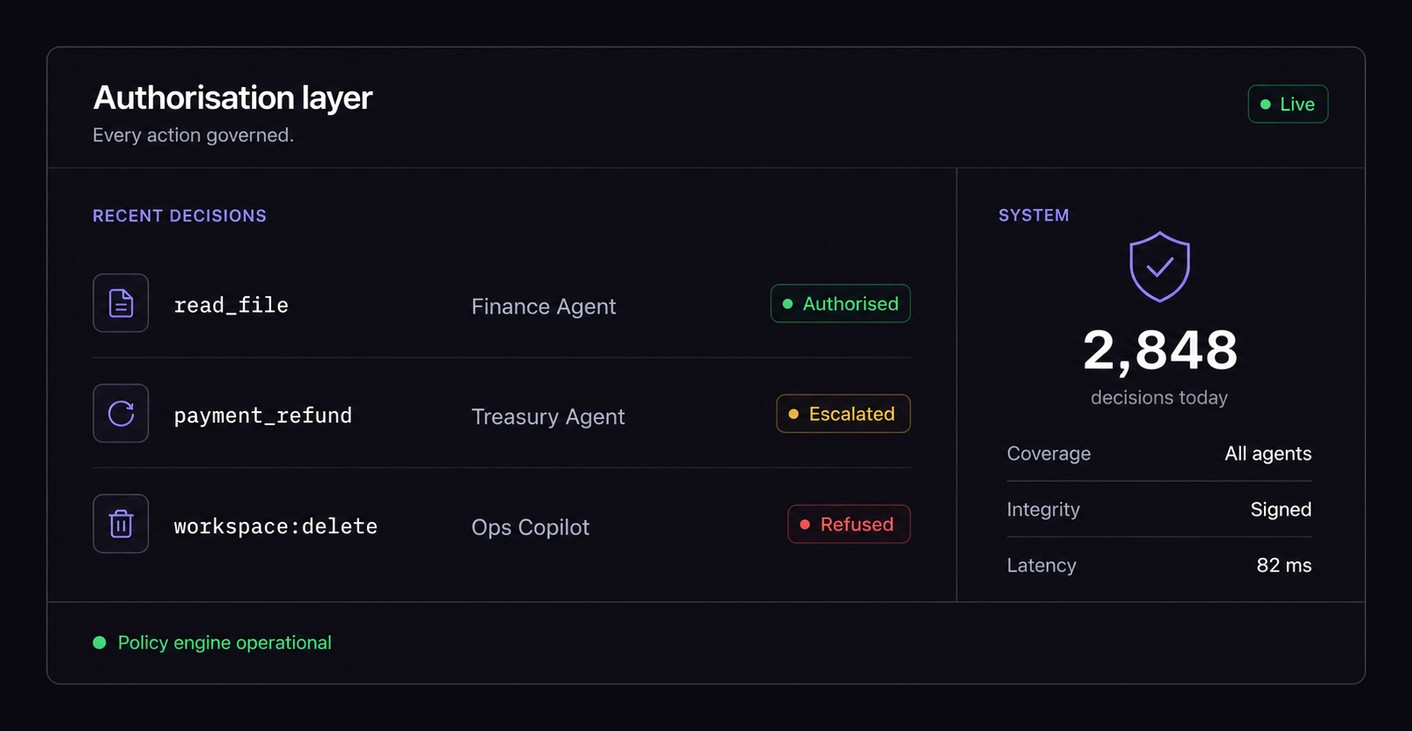
Every action is checked at intercept: deterministic rules first, then semantic intent, then a signed risk verdict. High-stakes actions pause for a human. Nothing runs on trust.
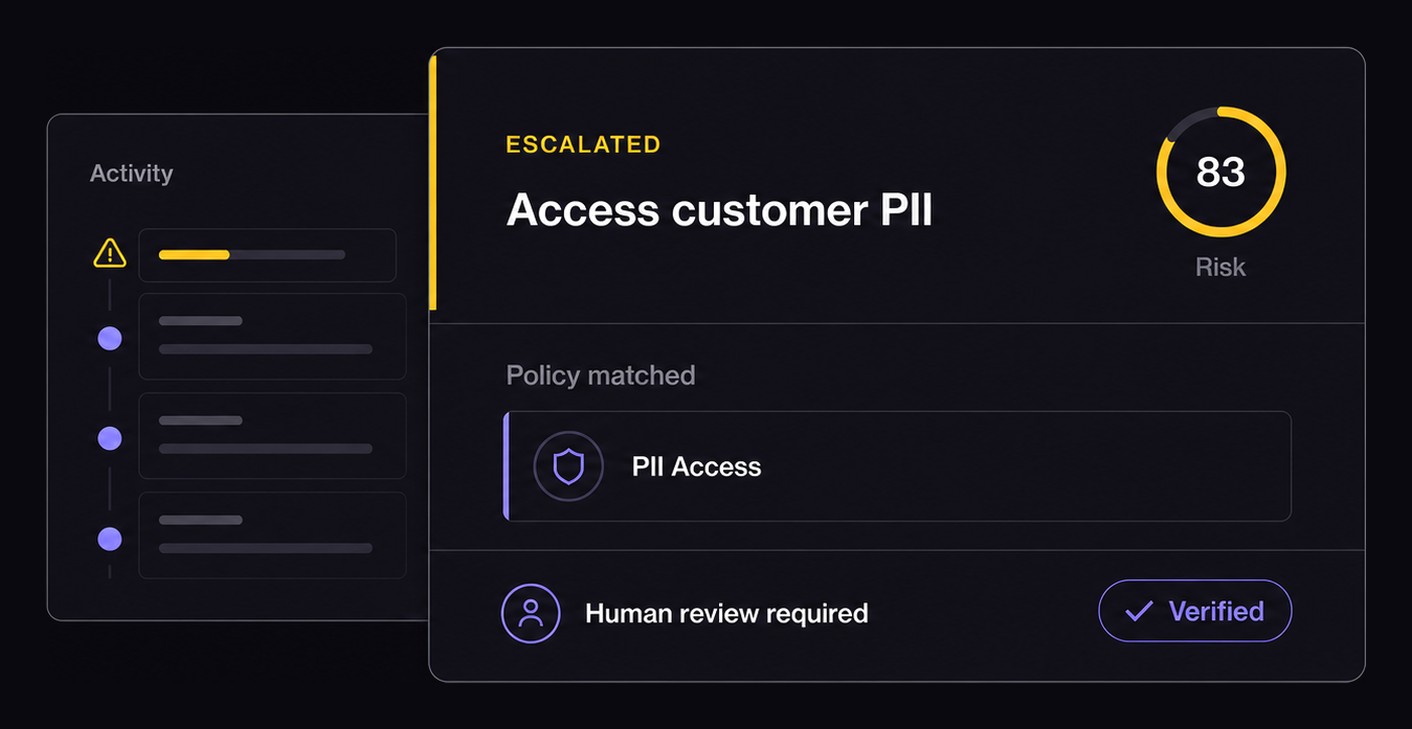
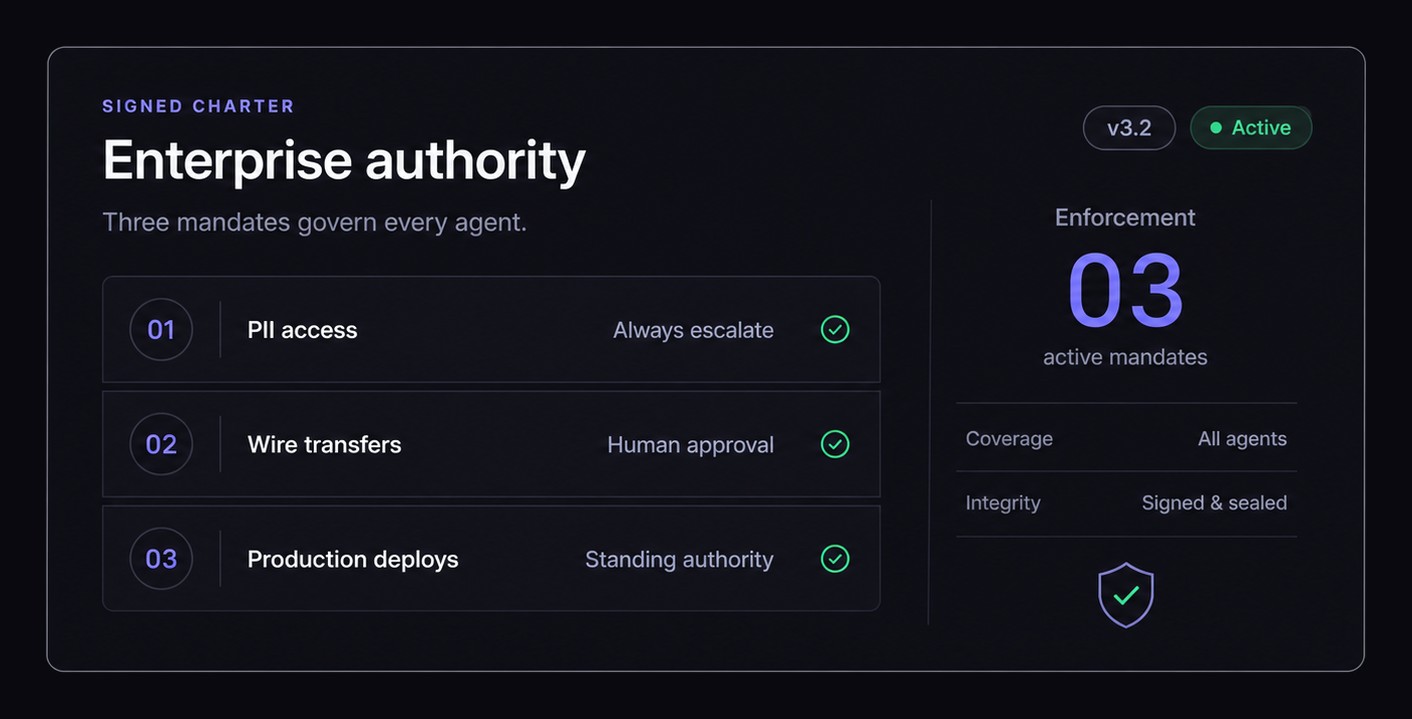
Define what agents may do in human-readable charter, compile it into deterministic mandates, and enforce the same security rules across every agent, framework and environment. Versioned, backtested, and reversible, your Charter is the root of agent authority.
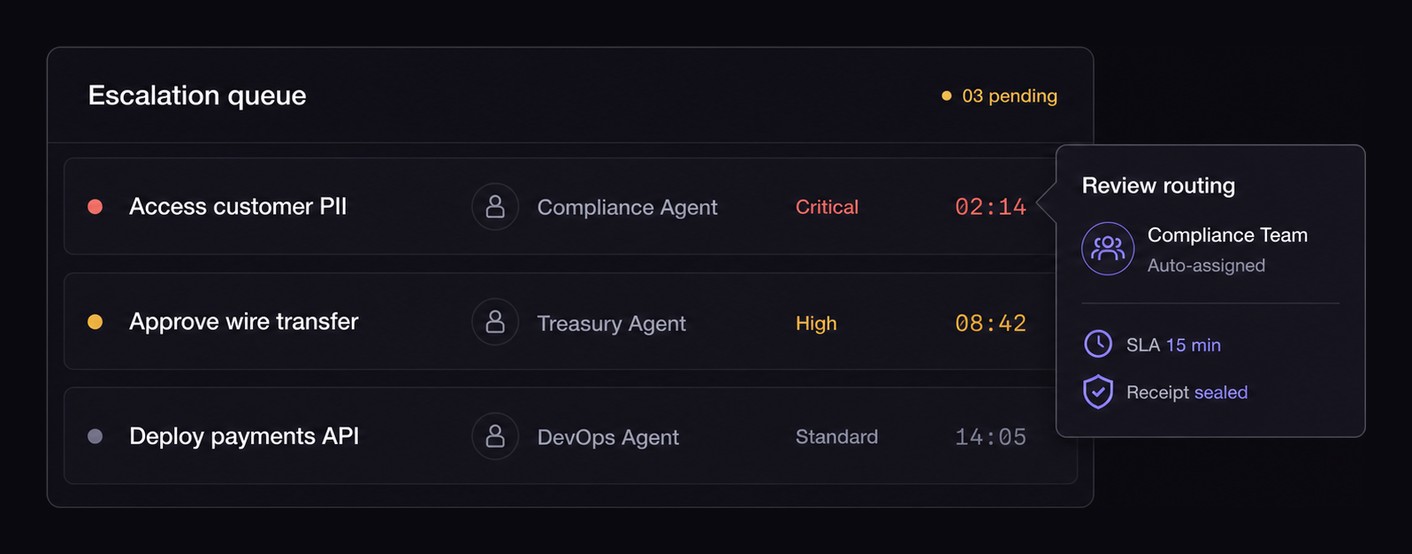
High-risk actions pause and route to the right approver with full context. Everything else runs untouched. Every escalation and decision is queued, tracked, and sealed.
Every verdict is sealed to the Provenance Vault with a signature and a hash chain, offline-verifiable and ready for EU AI Act, SEC, and HIPAA review. Proof, not promises.
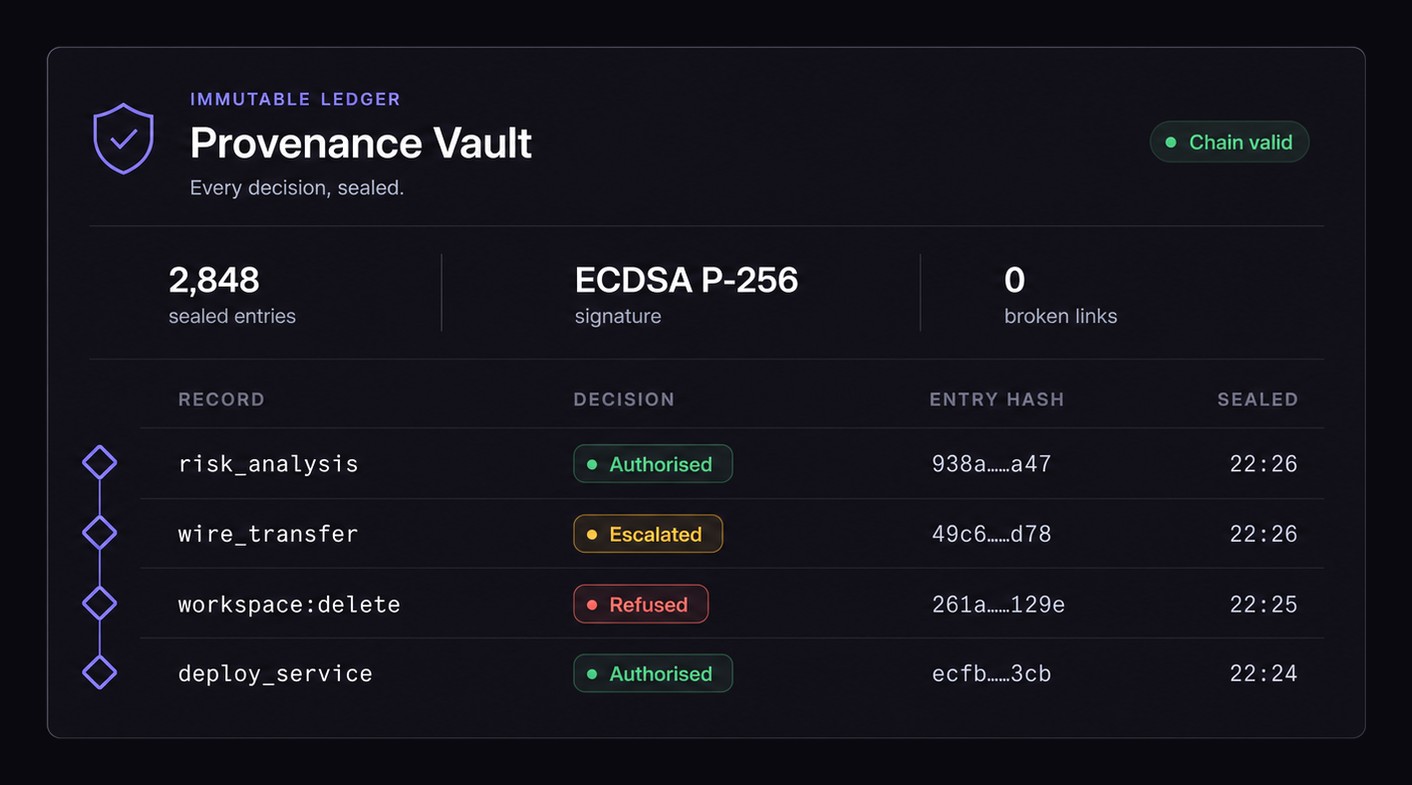
Turn every mandate into inspectable rules, prove it is safe against real history, then ship it as versioned, deployable code.
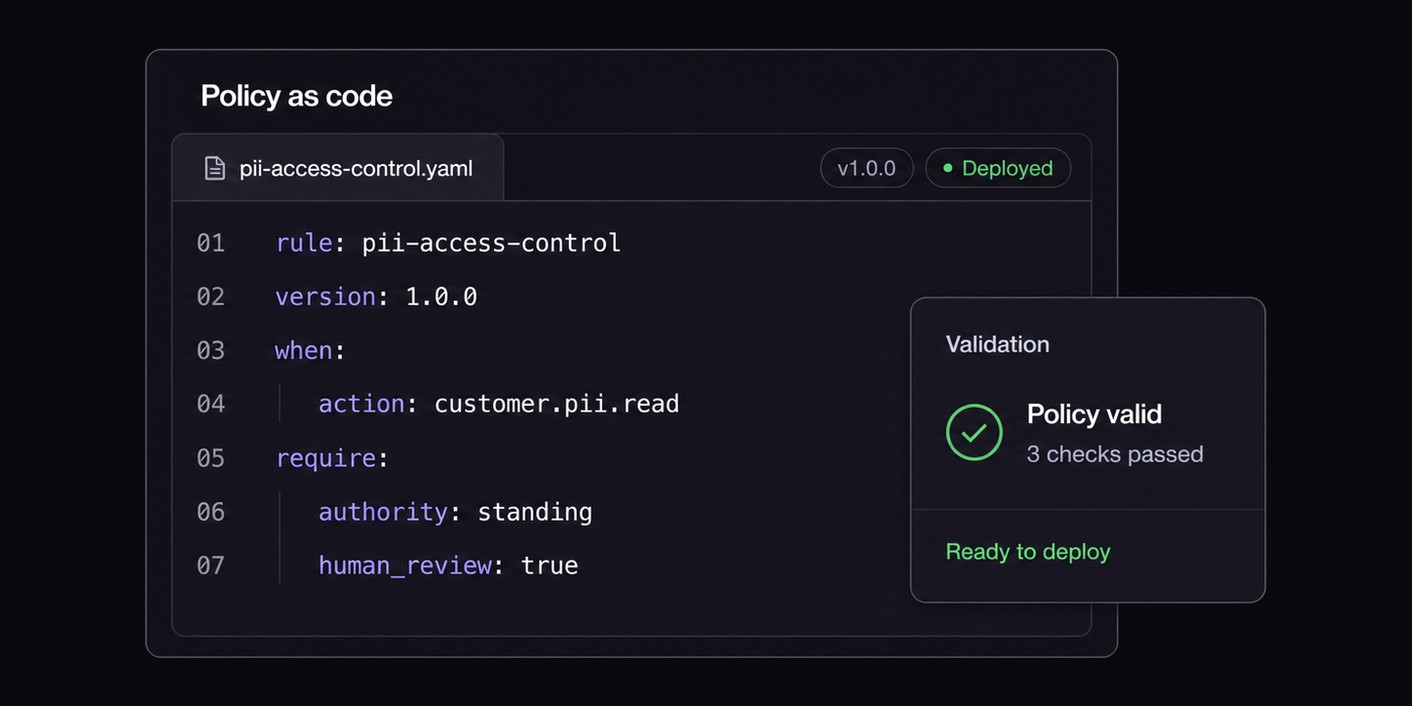
Author enforcement as versioned YAML, validate every change, and deploy from CI.
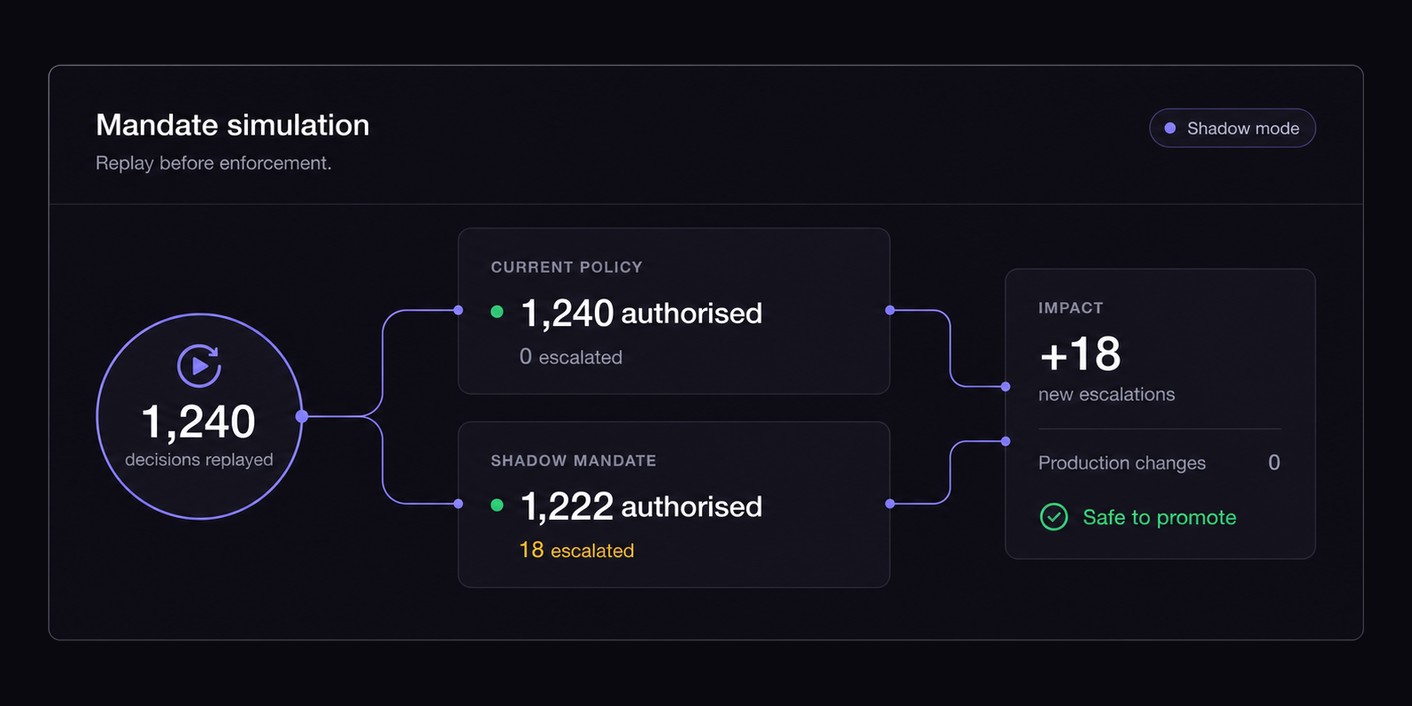
Replay any mandate against historical decisions in shadow mode, then promote with one click.
Register every agent, scope its authority with roles, and pass or revoke that authority cleanly across your fleet.
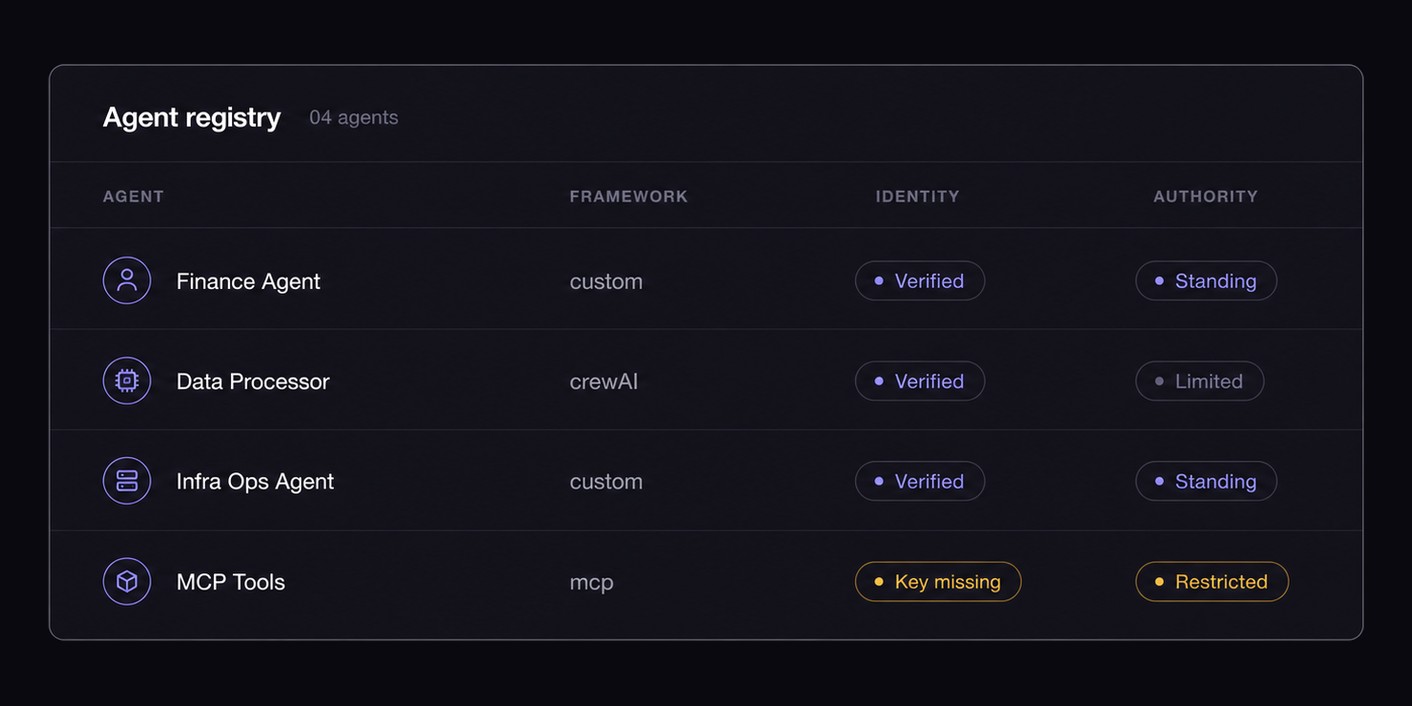
A signed registry of every agent, its framework, identity, and standing authority.
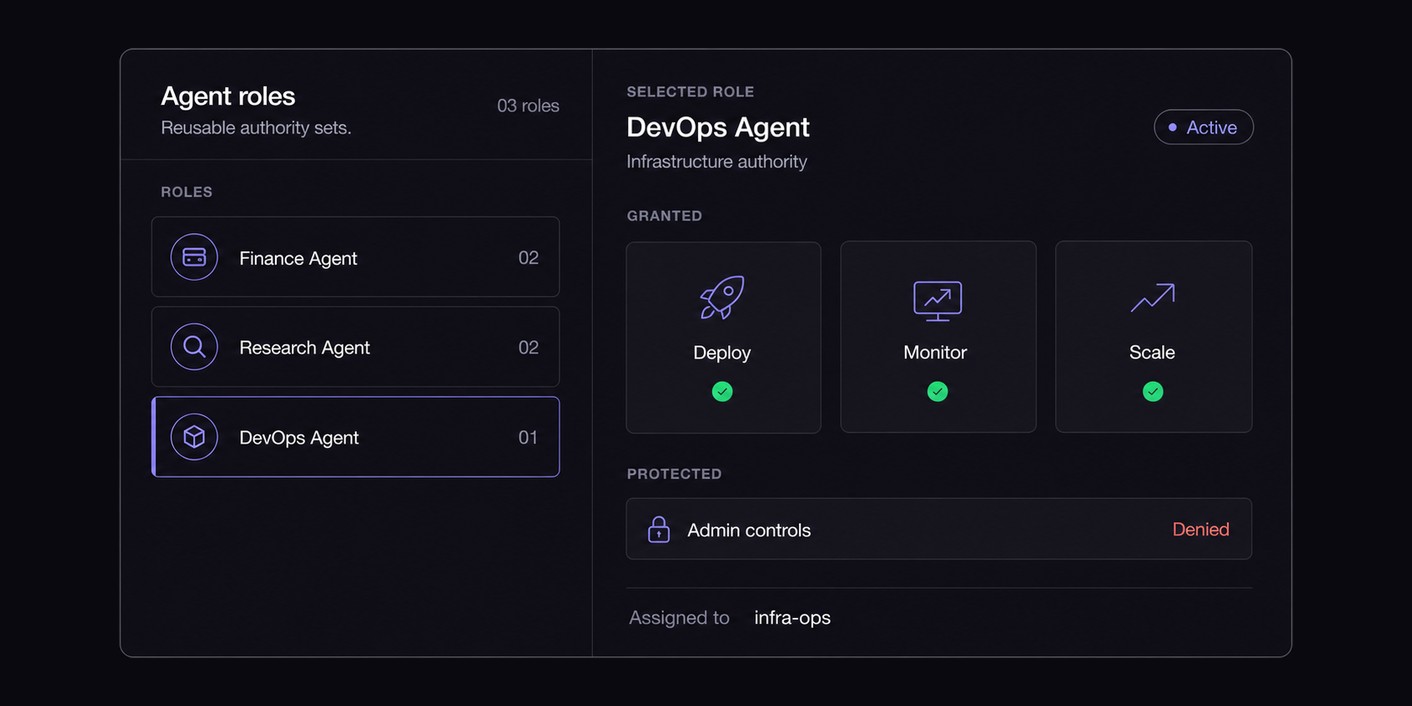
Reusable authority sets you assign to agents, so least privilege scales with your fleet.
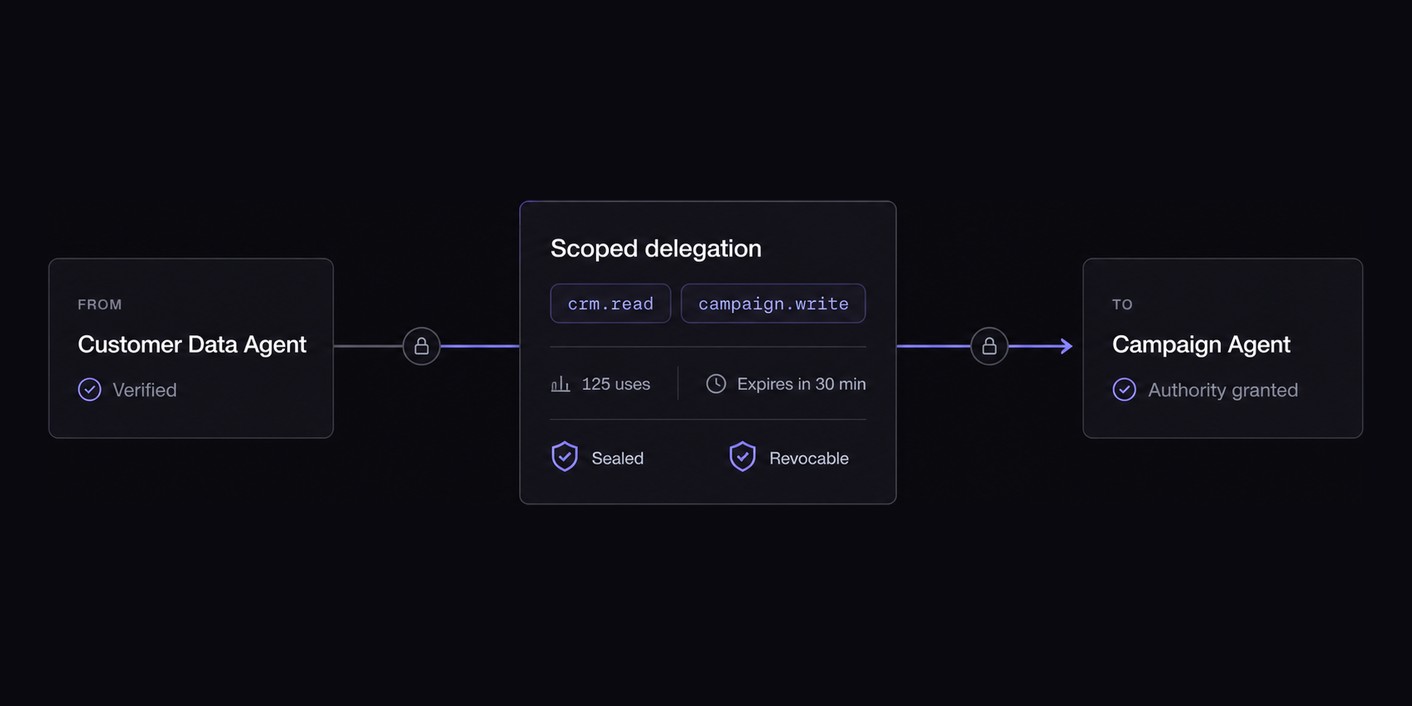
Agents grant scoped authority to other agents, with a chain you can verify and cut instantly.
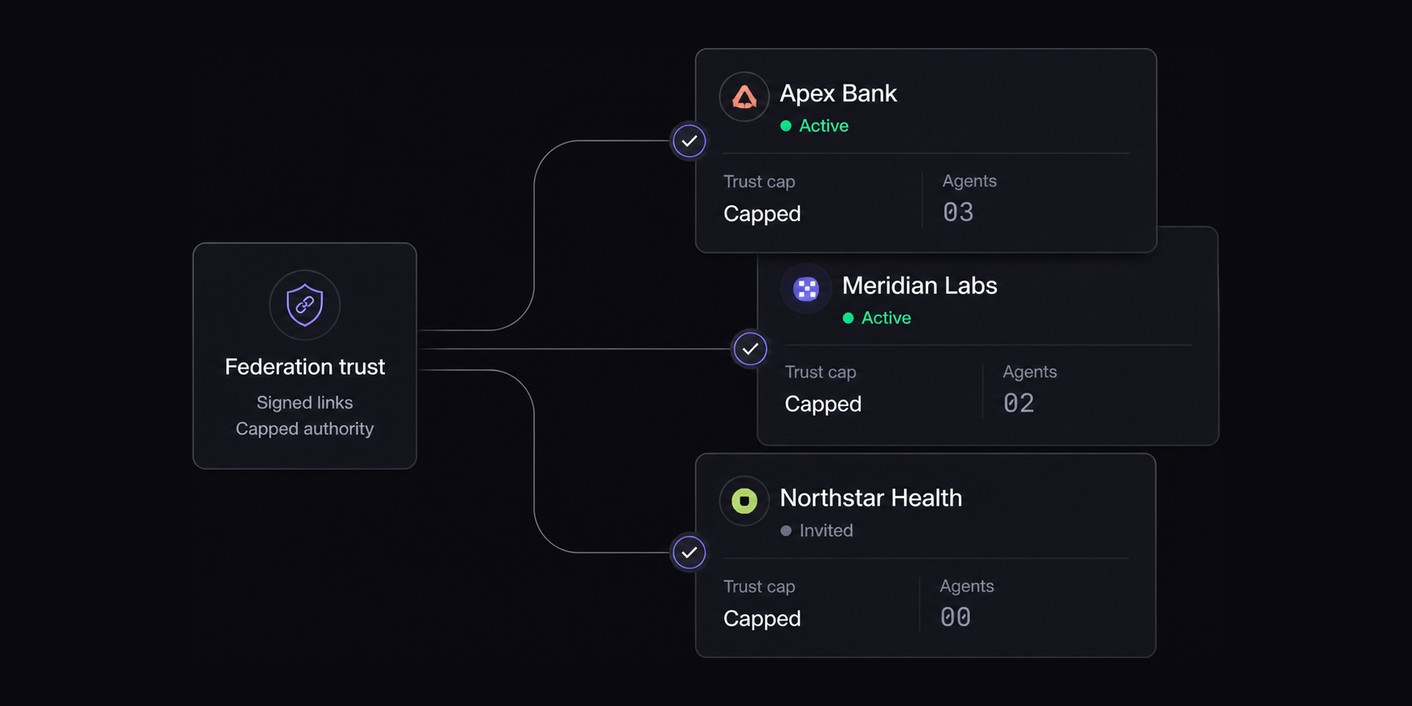
Apply one charter across every workspace and environment, decisions rolling up to a single trail.
Time-box access, keep an accountable emergency path, and stream every decision to your stack.
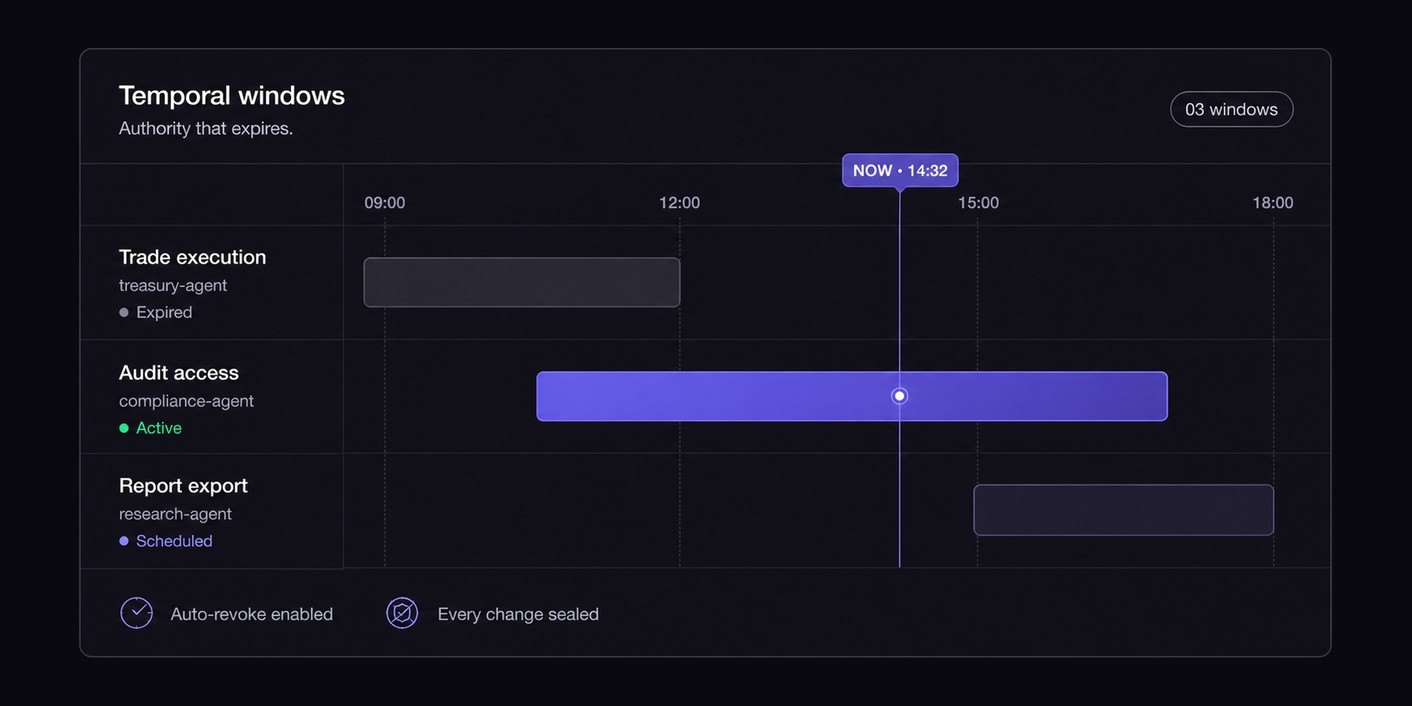
Grant access only within a window; it expires on its own, no cleanup required.
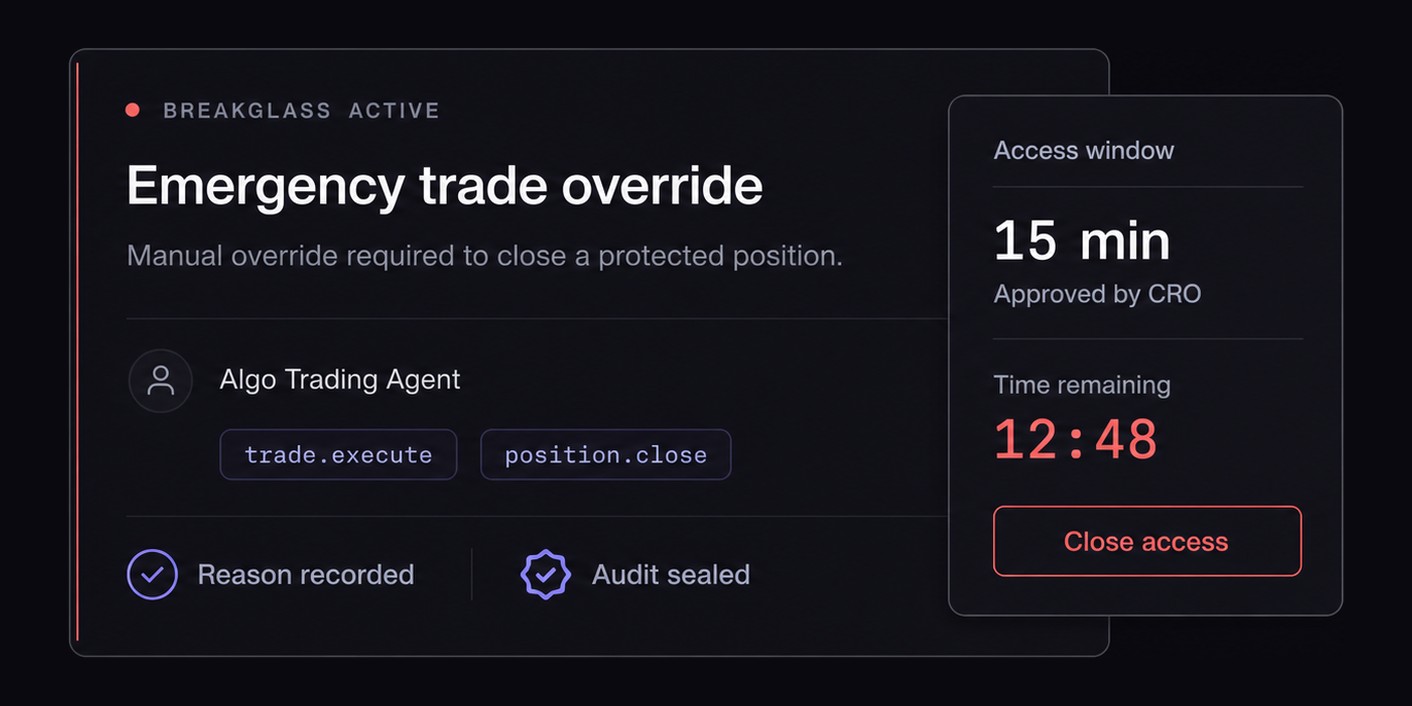
Open a controlled break-glass path that is time-limited and sealed to the vault.
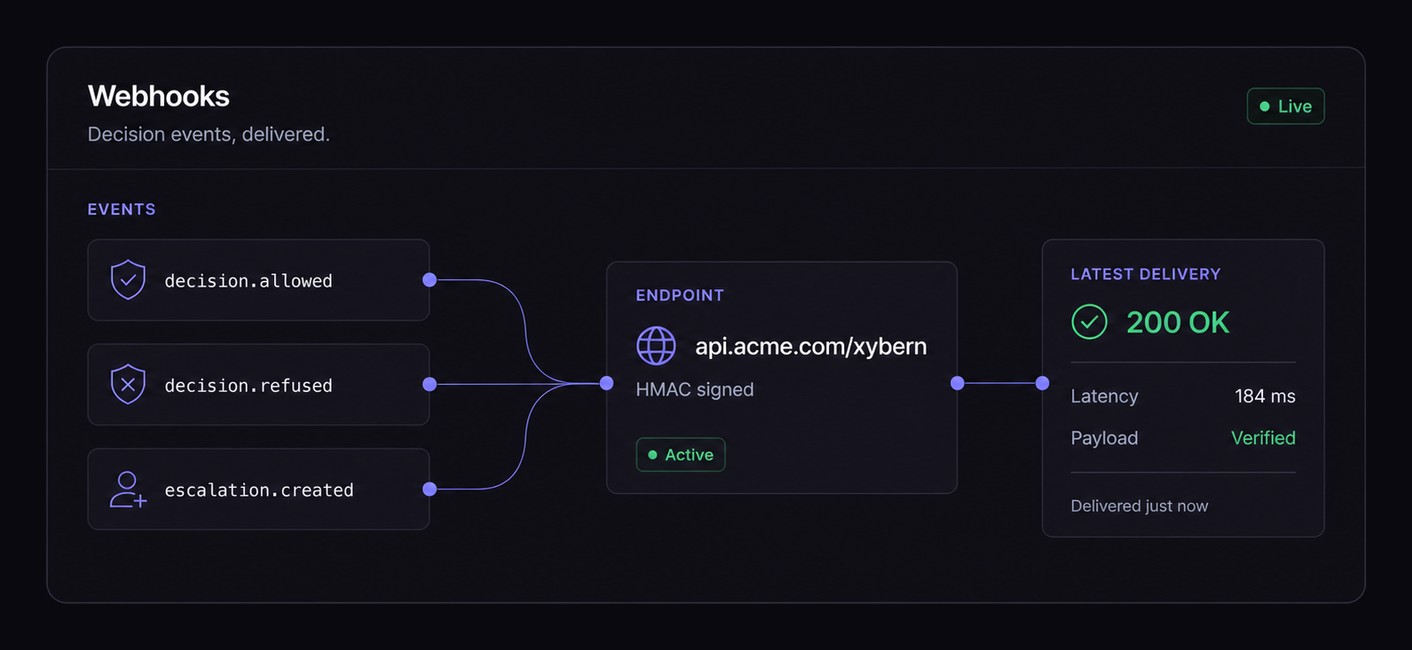
Stream every allow, block, escalate, and break-glass event to PagerDuty, Slack, and your SIEM, delivered as signed webhooks your systems can trust.
Xybern is framework-agnostic. Drop it into your existing agent stack with minimal configuration.

 AutoGen
From plan-level intent contracts and least-privilege access profiles to outcome-based mandates and a signed risk verdict, the pieces that decide what runs.
Put one workflow behind the Authorisation Layer. Deploy in days, not months, and see every decision sealed to the vault.
Every agent action is intercepted before it executes and evaluated against your charter. Xybern returns one of three verdicts, allow, escalate, or block, in a single synchronous call, then seals the outcome to the vault.
The action passes through the evaluation stack in order: deterministic rules first, then semantic intent, then a signed risk verdict. The first decisive check short-circuits, so obvious cases resolve in microseconds and only the ambiguous ones reach a model.
The same decision is enforced wherever the action originates, inside your agent through the SDK, at the MCP and AI gateway, or over a plain HTTP call. One charter, one verdict, every path.
If the layer cannot reach a verdict, the action does not run. A high-stakes call never falls through to trust because a check was momentarily unavailable.
| Verdicts | Allow, escalate, or block |
| Order | Deterministic, semantic, verdict |
| Short-circuit | First decisive check wins |
| Latency | Microseconds deterministic, sub-second semantic |
| Failure mode | Fail-closed |
| SDK | Python, at intercept |
| Gateway | MCP and AI tool calls |
| Transport | HTTP, synchronous |
| Output | Signed decision record and receipt |
Not a scalar trust score. Every decision returns four signed dimensions, so you know exactly why an action was allowed or refused, and can act on any one of them.
Intent alignment measures whether the action matches its stated purpose. Conformance checks it against the agent’s standing authority. Blast radius scores how much it could affect. Provenance weighs the history behind the request.
Each dimension is scored and reasoned, not one opaque number. A charter can key on any single dimension, for example escalate when blast radius is high even if intent looks clean.
| Intent alignment | Does the action match its purpose |
| Conformance | Within the agent’s authority |
| Blast radius | How much it could affect |
| Provenance | The history behind the request |
| Range | 0 to 100 per dimension |
| Signature | ECDSA P-256 |
| Record | Openable, downloadable, verifiable |
| Replaces | The legacy scalar trust score |
Declare an outcome in plain English. Xybern compiles it into a mix of enforcement primitives, backtests it against real history, and seals it into your Charter as versioned, deployable charter.
A single outcome can become a deterministic allow-list, a semantic intent check, a sequence rule, and a verdict threshold at once. You describe the result you want, not the plumbing.
Backtesting replays the compiled charter against your historical decisions in shadow mode and shows what it would have caught and refused, with no effect on live traffic, until you promote it.
The Charter is signed, diffable, and reversible. Every change is a versioned artifact you can review, ship from CI, and roll back in one click.
| Input | Natural-language outcome |
| Compiles to | Deterministic, semantic, sequence, verdict |
| Backtest | Against historical decisions, in shadow |
| Modes | Observe or enforce |
| Versioning | Signed, diffable, one-click rollback |
| Deploy | From CI, as bundles |
High-risk actions pause and route to the right approver with full context. Execution stays blocked until a human authorises or refuses, and everything else runs untouched.
Escalations are routed by charter, agent, and risk to a team, role, or on-call rotation, with a configurable SLA. The approver sees the intent, the matched charter, and the verdict that triggered the pause.
While an escalation is open the action is held, not executed optimistically. The decision, the reviewer, and the resolution are all sealed to the vault.
| Trigger | Charter match or verdict threshold |
| Routing | Team, role, or on-call |
| Context | Intent, charter, and verdict shown |
| SLA | Configurable per charter |
| While pending | Execution blocked |
| Record | Decision and resolution sealed |
Every verdict is sealed to the Provenance Vault with a signature and a hash chain. Records are append-only and offline-verifiable, ready for EU AI Act, SEC, and HIPAA review.
The vault is not a log you have to believe. Each entry links to the one before it, is signed, and can be verified with the public key alone, with no call back to Xybern.
Share signed proof of a single decision without exposing the rest of your history, or export a scoped pack for a period, an agent, or a decision.
| Structure | Hash-chained, append-only |
| Signature | ECDSA P-256 with HMAC |
| Verify | Offline, with the public key |
| Tamper | Any change breaks the chain |
| Disclose | Selective, one decision at a time |
| Export | EU AI Act, SEC, HIPAA packs |
| Retention | Configurable |
| Coverage | Every decision sealed |
Stream every authorisation decision to your stack as a signed event. Route allow, block, escalate, and break-glass events to the tools your team already runs.
Events are delivered as HMAC-signed webhooks with retries, so downstream systems can trust and replay them. Point them at incident tooling, chat, or your SIEM.
A webhook fires the moment a decision is made, including escalations opened and break-glass sessions started, so your on-call and audit tooling stay in step.
| Types | decision.allowed, refused, escalated, break-glass |
| Trigger | On each decision |
| Payload | Decision, verdict, agent, receipt id |
| Signing | HMAC |
| Retries | Yes, with backoff |
| Targets | PagerDuty, Slack, SIEM |
| Format | JSON |
 Xybern